


03 Nov 2026
Once Upon a Time in Saly: South Africa and China Close Dakar Beach Sprints with Gold
South Africa’s Callum Dreyer and China’s Liu Lili claim the Men’s and Women’s Solo titles as the first Youth Olympic Games Beach Sprints competition concludes with a truly global podium.
SALY, Senegal – In Saly, on a beach beside the Atlantic Ocean, rowing found a new kind of rhythm on an Olympic stage.
On the fourth and final day of Rowing Coastal Beach Sprints at the Dakar 2026 Youth Olympic Games, South Africa’s Callum Dreyer and China’s Liu Lili claimed the final two gold medals, bringing a memorable first Youth Olympic appearance for the discipline to a close.
Dreyer’s victory gave South Africa a landmark title for African rowing, while Liu’s gold added to the country’s historic Mixed Double victory on Monday. Spain featured on both Solo podiums, taking silver in the men’s event and bronze in the women’s.
It was a fitting conclusion to a competition that has offered a glimpse of a more geographically diverse future for rowing. Traditionally dominated by European nations, with strong historical programmes in the USA, Australia and New Zealand, Beach Sprints are opening another door into the sport. In Dakar, Africa and Asia topped the podium.
South Africa and China Take the Final Golds
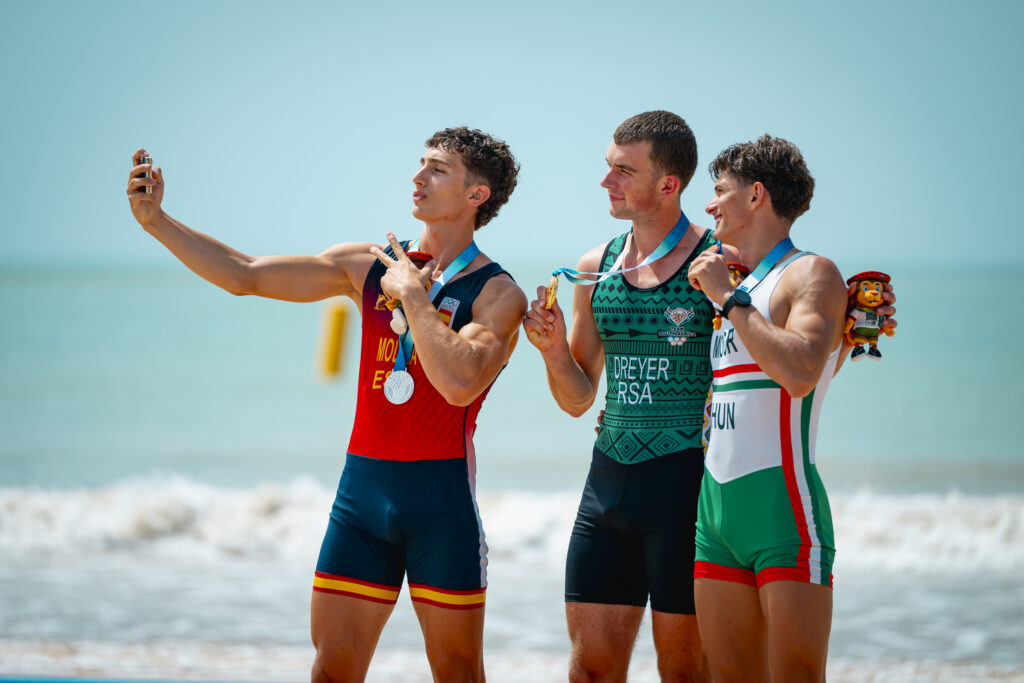
Dreyer delivered a remarkable performance, taking the Men’s Solo gold for South Africa. Spain’s Diego Molina Martinez took silver, while Hungary’s Adam Moor won bronze.
Dreyer had already announced himself as a serious contender earlier in the competition. On Day 3, he produced an impressive Last 16 win over Lithuania’s Justas Domarkas, using the waves on the return leg to reach the quarter-finals.
In the quarter-finals, Dreyer edged the Czechia’s Ondrej Zizka by just 0.14 seconds. He then progressed through the semifinals before delivering the gold-medal performance.
The result was an important moment for South African rowing and a powerful illustration of the opportunities Beach Sprints can create for athletes from outside the sport’s traditional centres.
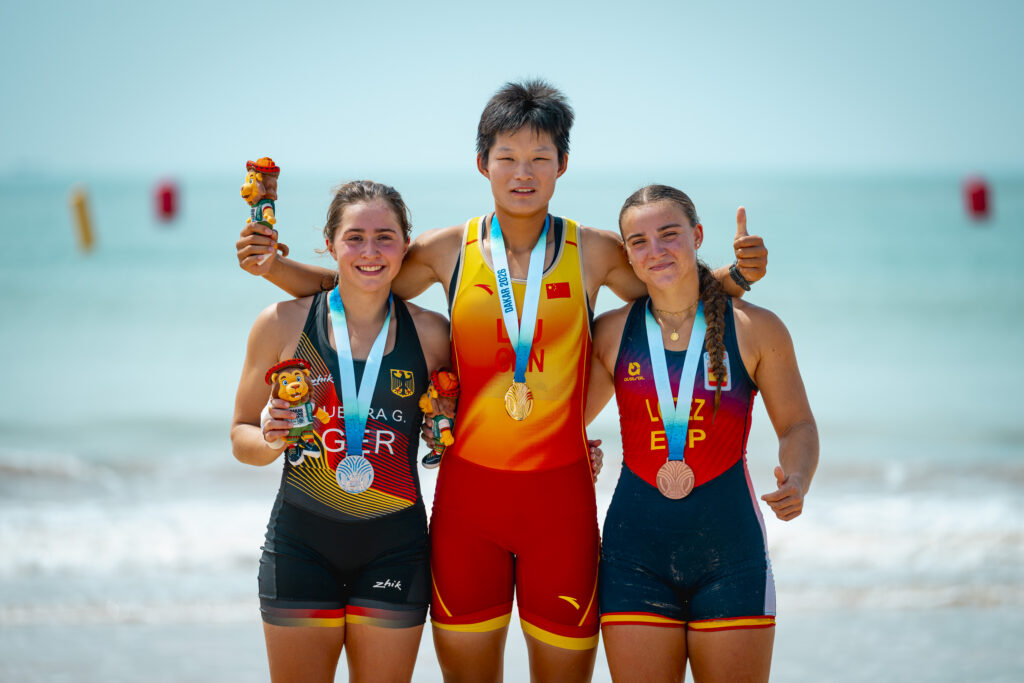
China continued its outstanding Dakar campaign in the Women’s Solo. After Su Juntao and Liu Lili made Olympic history by winning the first-ever Youth Olympic Mixed Double gold medal on Monday, China’s women’s representative added another gold to the country’s collection.
Germany took silver, while Spain secured bronze, edging the Czechia by just 0.21 seconds in the Bronze Medal Race.
The women’s competition delivered plenty of international variety through the knockout stages, with athletes from Switzerland, Germany, the Czechia, Australia, China and Spain all progressing deep into the draw.
The Atlantic Had its Own Ideas
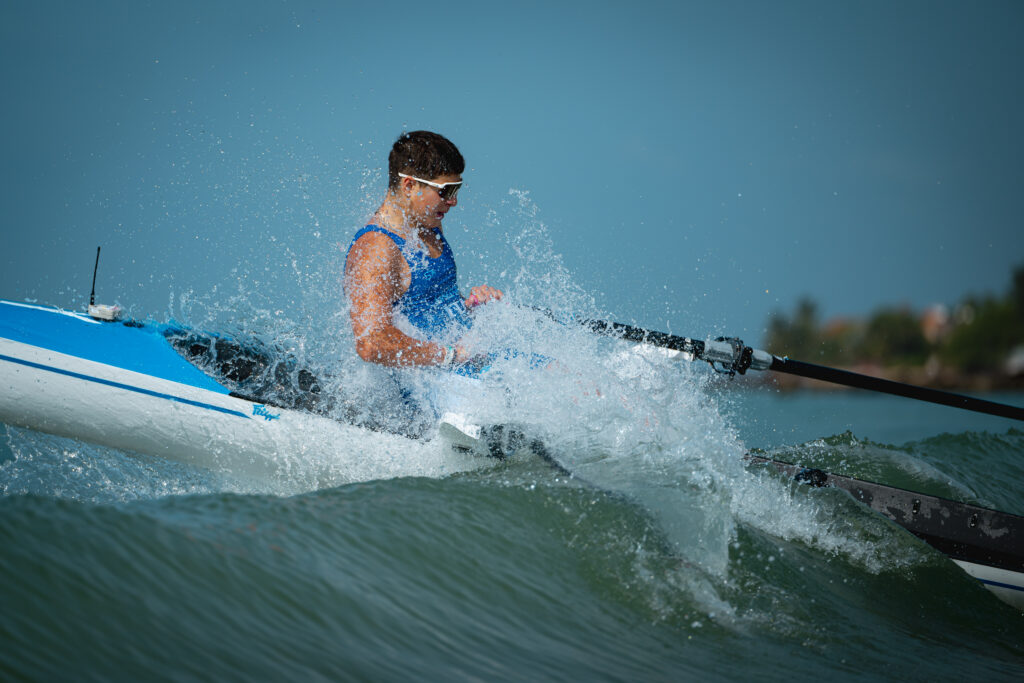
The final day unfolded against another changing Atlantic backdrop at Saly Beach West.
An offshore breeze was lifting an incoming swell of around 0.7 metres, while the rising tide allowed increasingly powerful waves to break over the reef and roll towards the beach.
The trickiest part came on the return leg, where a well-timed ride on a breaking wave could carry an athlete towards shore, while losing that wave could prove costly.
As World Rowing Technical Delegate Guin Batten observed, the waves didn’t necessarily affect the final buoy, but they significantly impacted the drag back to the beach.
If both athletes caught the same wave, they could ride it home together. If one dropped off the back, the other could suddenly have a decisive advantage.
It was another reminder that Beach Sprints are about much more than rowing speed. Athletes must combine explosive running, technical boat handling, tactical awareness and the ability to read the ocean, often making split-second decisions with a medal at stake.
An Olympic President Takes to the Water
Among those watching the final day was International Olympic Committee President Kirsty Coventry, who followed the racing throughout the competition.
An Olympic swimming champion for Zimbabwe, Coventry got an opportunity to experience the discipline from the water herself after the racing concluded.
Joining World Rowing’s Athlete Role Model Chris Bak, Coventry took to the Atlantic in a Coastal Double before swimming back to shore to end her visit.
It was an appropriately hands-on introduction to a discipline that will make its Olympic debut at the Los Angeles 2028 Olympic Games.
A New Olympic Chapter Begins in Africa
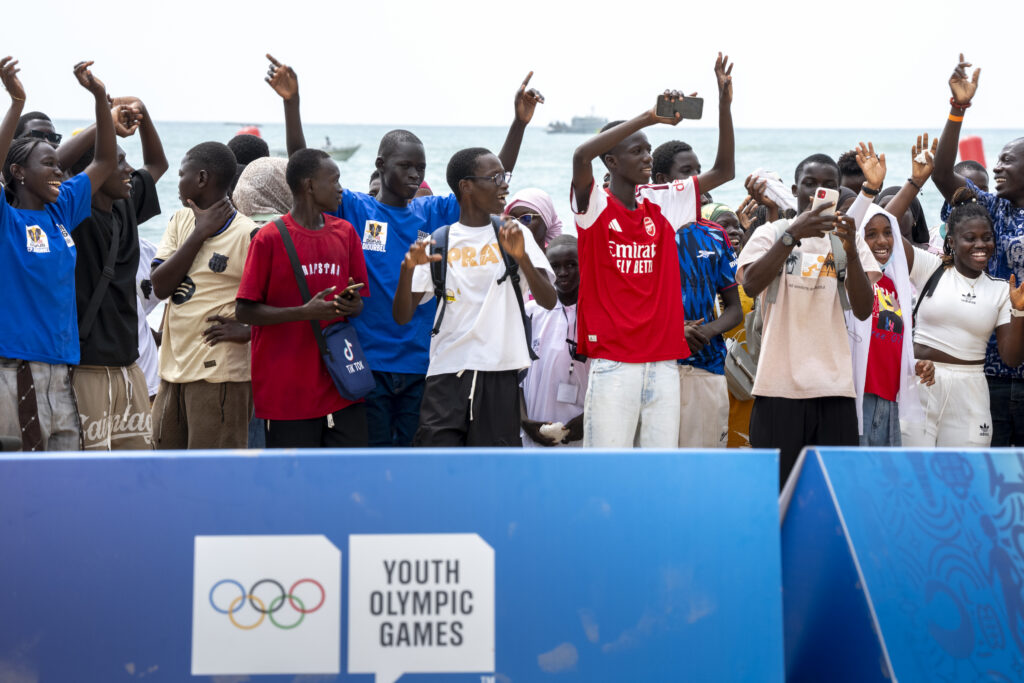
Dakar 2026 has been a landmark moment for Rowing Coastal Beach Sprints.
The Youth Olympic Games gave the discipline its first Olympic competition, culminating in the first Youth Olympic gold medals in the Mixed Coastal, Men’s Solo, and Women’s Solo events.
The format is a spectacular departure from classic rowing. Athletes sprint down the beach, launch into their boats, navigate a 250m slalom course, execute a 180-degree turn around a buoy and race back towards shore before sprinting across the sand to the finish.
It is rowing at full volume: explosive, unpredictable and made for a beachside audience.
The competition also brought an international rowing event to Africa, with Senegal providing an extraordinary setting for a new generation of athletes to compete on an Olympic stage.
China’s Su Juntao and Liu Lili opened the medal story by becoming the first Youth Olympic champions in the Mixed Double event. Austria and France joined them on that historic podium. South Africa and China then closed the Solo events with gold, while Spain featured prominently across both events.
On Saly Beach West, with the Atlantic rolling in and Senegal’s drums providing the soundtrack, a new chapter in Olympic rowing was written.
Once upon a time in Saly, Beach Sprints brought the ruckus. And the world was watching.